
Ovarian Cysts

What are ovarian cysts?
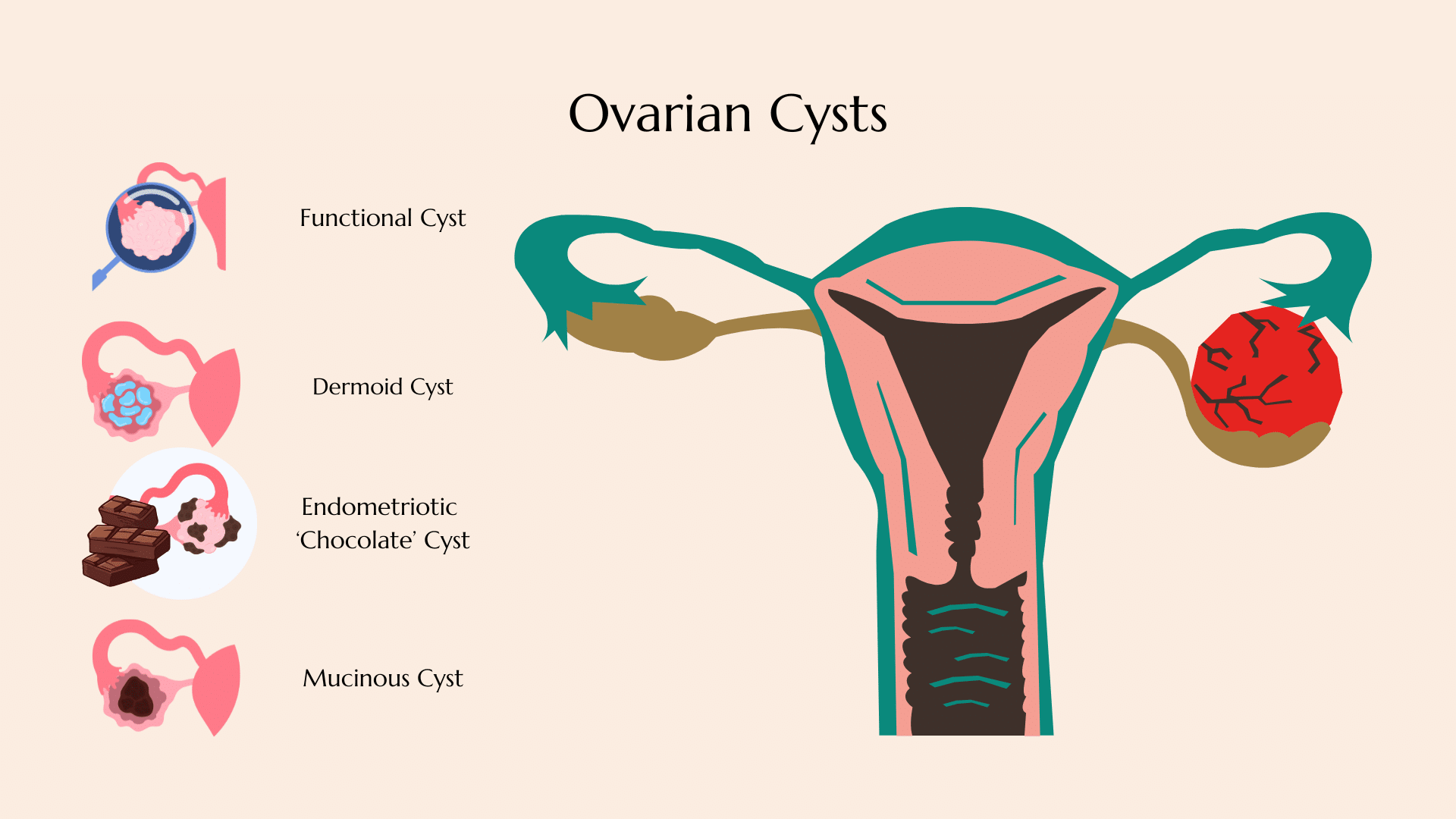
An ovarian cyst is a sac filled with watery or mucous material that develops in the ovaries. Some common ovarian cysts include dermoid cysts, endometriotic, haemorrhagic cysts or follicular cysts.
Cysts can be functional or pathological.
Types of Ovarian Cysts
Ovarian cysts are common and often harmless. They can rarely cause complications, but some types may require monitoring or treatment.
Simple or Functional Cysts
Functional ovarian cysts are common occurrences that are linked to the menstrual cycle.
Normally, each month, an egg develops within a follicle in the ovary. If the follicle fails to release the egg or does not shrink after releasing it, it can swell and form a cyst filled with fluid.
These functional cysts are typically benign (non-cancerous) and asymptomatic, often resolving on their own without the need for treatment. They come in two forms:
- Follicular Cysts: A follicular cyst forms in the ovary when a small sac, called a follicle, fails to release an egg during the menstrual cycle and instead fills with fluid, forming a cyst.
- Corpus Luteum Cysts: A corpus luteum cyst develops after a follicle releases an egg. Normally, the follicle transforms into the corpus luteum, which produces hormones and then dissolves if pregnancy doesn’t occur. Sometimes, however, it fills with fluid instead of breaking down, forming a cyst.
Complex or Pathological Cysts
In contrast to functional ovarian cysts, pathological ovarian cysts result from abnormal cell growth unrelated to the menstrual cycle. These cysts are likely to persist and may grow in size, causing symptoms.
- Dermoid cysts: Formed from cells you are born with. These cells can grow into various tissues, and the cyst might include hair, skin, fat, or even teeth. Although usually noncancerous, dermoid cysts can become malignant in about [1–2%] of cases.
- Endometriomas: Also known as chocolate cysts, are often associated with endometriosis and are characterized by cysts filled with menstrual blood.
- Cystadenomas: Form on the ovary’s surface and contain ovarian tissue with mucus or fluid.
Ultrasound imaging is essential for distinguishing between different types of ovarian cysts and guiding appropriate management.
Symptoms of pathological cysts
These cysts may become very large, causing symptoms such as:
- Pelvic pain
- Bloating
- Painful bowel movements
- A frequent need to urinate
- Irregular periods
- Painful intercourse
Complications of pathological cysts
- Risk of ovarian cysts accident:
- Untreated cysts may become infected and rupture. Infected cyst fluid may trigger sepsis, a life-threatening immune response to harmful bacteria.
- Ovarian torsion (twisting of the ovaries) may also occur, cutting off the blood flow to the ovaries.
- Cysts may grow too big and exert pressure on the ovaries, cutting off the blood flow to them.
- Risk of ovarian cancer:
- The majority of ovarian cysts are non-cancerous, but a small number can be cancerous.
- Slight difficulty in conceiving
Ovarian Cyst Treatment and Management Options in Singapore
The approach to treating ovarian cysts depends on several factors, including the type and size of the cyst or the severity of the symptoms.
Some cysts may resolve on their own and only require monitoring, while others might need medication or surgical removal.
For proper treatment and management, early ovarian cyst evaluation is important, as timely assessment can help prevent complications and protect reproductive health.
Non-Surgical Management, Monitoring, and Medication
Small, symptom-free ovarian cysts are often managed with watchful waiting, with regular ultrasounds to see if they go away on their own.
Birth control pills can help prevent new cysts by stopping ovulation, but they will not shrink a cyst that is already present. This approach allows doctors to manage ovarian cysts conservatively while minimising unnecessary interventions.
Minimally Invasive Laparoscopic Surgery
Your ovarian cyst specialist in Singapore can recommend removing your cysts surgically if they are larger than 10 cm, cause pain, and interfere with conception, or if suspected to be cancerous.
A minimally invasive procedure is called a laparoscopic surgery, where the doctor inserts a small camera into your abdomen through a small incision. Most patients recover in four to six weeks.
Fertility-Focused Treatment Considerations
Certain ovarian cysts, such as endometriomas, may affect fertility and are sometimes associated with difficulty conceiving.
When surgery is required, there is a possibility of reducing the ovarian reserve if healthy tissue is affected. Large cysts can also press on the ovary, and scar tissue may obstruct the fallopian tubes.
It is important to discuss your future family-planning goals with your doctor so that your treatment plan can protect your fertility as much as possible.
When should I go to a doctor?
Most of the time, ovarian cysts are discovered incidentally during medical check-ups.
However, seek urgent medical attention if you have the following symptoms:
- Severe abdominal pain
- Dizziness
- Fever
- Nausea and vomiting
What will the doctor do during consultations?
Here are some things you can expect during your consultation at Eden Women’s Health:
- History taking of symptoms and general health
- Physical examination to check for masses or tenderness
- Screening using transvaginal ultrasound and associated investigations
- Scheduling of blood tests if needed
- Discussion of ovarian cyst treatment or removal options
Frequently Asked Questions
Are ovarian cysts dangerous and common?
Yes, ovarian cysts are common, occurring in approximately 10 out of 100 women. They are often harmless and rarely cause complications.
What symptoms should I watch out for?
If you experience symptoms such as severe abdominal pain, dizziness, fever, nausea, and vomiting, it is best to seek urgent medical attention.
Can ovarian cysts affect fertility?
Most ovarian cysts do not affect fertility and often resolve on their own. However, some cysts are linked to conditions like endometriosis or may require ovarian cyst surgery, which can impact ovarian health and fertility. Remember to discuss any risks with your doctor before treatment.
Do all ovarian cysts require surgery?
No, surgery is not needed for every ovarian cyst. Many cysts resolve on their own over time. Your doctor may suggest surgical removal if the cyst is large (over 10 cm), causes discomfort, affects fertility, or is suspected to be cancerous.
How are ovarian cysts diagnosed?
Ovarian cysts can be diagnosed through ultrasound imaging. Blood tests are also recommended if there’s any indication or concern that a cyst is cancerous.
Are ovarian cysts cancerous?
Most ovarian cysts are benign, but certain complex cysts, particularly in post-menopausal people, can have a greater risk of being cancerous.

Schedule An Appointment
Ovarian cysts are typically discovered incidentally during routine check-ups at our gynaecology clinic. As a result, many women choose to schedule regular follow-up appointments, especially if they have a history of ovarian cysts.
At Eden Women’s Health, our dedicated healthcare team strives to understand your unique needs and provide you with essential information to empower you in managing your health. Speak with our experienced team today and let us guide you through your journey with confidence and care.